Creatine – knowledge, effects and practical use
This post is sponsored and contains links from our business partner(s).
Creatine is among the most widely used supplements in strength training and performance. It is used by both exercisers and experienced athletes who want to support their training and physical development. Yet there are often questions about how creatine works, what you can realistically expect, and how it is best used in practice. This article reviews the key aspects of creatine in a simple and scientifically based way.
What is creatine?
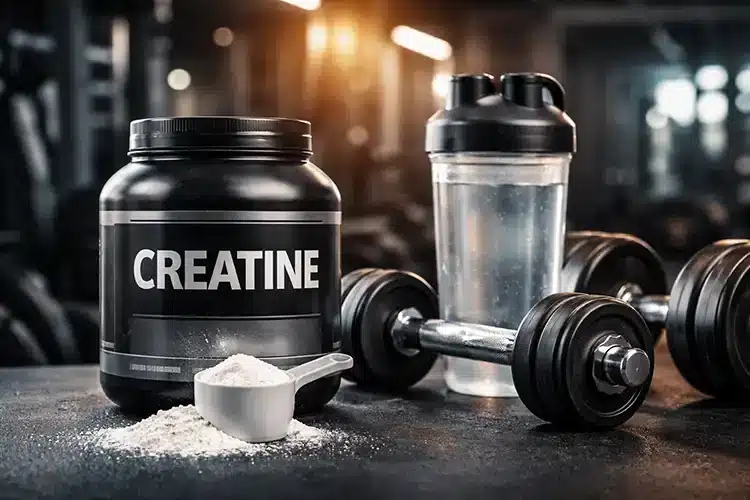
Creatine is an organic compound that is found naturally in the body – primarily in muscle cells. Here it plays a central role in energy production during short, intense loads such as heavy lifting or explosive movements. The body produces creatine itself, and it is also found naturally in foods such as meat and fish. However, many people choose to supplement with creatine to ensure that the muscles are sufficiently saturated.
Creatine's role in energy production
ATP and muscle work
When muscles work at high intensity, the body's energy reserves are quickly depleted. Creatine helps by supporting the formation of adenosine triphosphate (ATP), the primary energy source for cells. During short, demanding activities, ATP is rapidly depleted, which can limit performance.
Phosphocreatine in muscles
In the muscles, creatine is stored as phosphocreatine. This form acts as a rapid energy reserve that can help restore ATP when the body needs it. The result is better energy availability during repeated, intense loads.
Known benefits of creatine
Muscle volume and fluid balance
One of the most well-known effects of creatine is that it increases the water content in muscle cells. This can give muscles a fuller appearance and contribute to a faster experience of muscle growth.
Strength and explosiveness
Many people experience increased strength and improved performance, especially in high-impact or explosive exercises, making creatine relevant in training formats where intensity and repetitions play a crucial role.
Recovery after training
Creatine is also associated with better recovery after hard training. It can help reduce the strain on the muscles and make it easier to maintain a stable training level over time.
Dosage in practice
There are different approaches to creatine dosing. A common method is to start with a so-called loading phase, where a higher amount is taken over a short period of time. This is followed by a maintenance phase with a lower daily dose. Alternatively, some choose to skip the loading phase and simply take a fixed daily amount.
The most important thing is consistency, as the effects of creatine build up over time through regular use.
Timing and daily use
There are differing opinions on when creatine should be taken. Some prefer to take it before training, while others take it after. Overall, experience and research indicate that the timing is less important than a daily, consistent intake. Creatine works best when it becomes a regular part of your routine.
Safety and common misconceptions
Creatine is generally considered safe for healthy individuals when used in recommended amounts. Some people may experience mild discomfort such as stomach upset, especially at high doses. There have been many myths about creatine over time, including concerns about the kidneys, but scientific studies have not shown any problems in healthy users when used correctly.
Creatine as part of a structured training routine
Creatine is not a shortcut, but a supplement that can support a targeted training effort. Combined with regular training, adequate recovery and a balanced diet, creatine can be a useful tool for those who want to optimize their physical performance and development.
It happens in Aarhus
Find an overview of the upcoming experiences and events in Aarhus.
Articles

Mediterranean dining and festivities at VinDanmark

OS, Kaffe & Vin – a cultural center disguised as a café in the heart of Frederiksbjerg

Son of Reggae – Azizzi Romeo

Iris Gold on stepping into the role of Tina Turner

TINA – The Tina Turner Musical in Musikhuset Aarhus: Simply the Best

Infernal prepares for HøjtidsHærg on TRAIN

Series Awards 2026: Here are this year's nominees

Carsten Bang brings HUMAN AGE back to Aarhus
Move Your Mind Festival 2026 on Bora Bora

All The Feels on Bora Bora lets the emotions run wild

Revisit Favorites from the collection at ARoS